 SilencerScout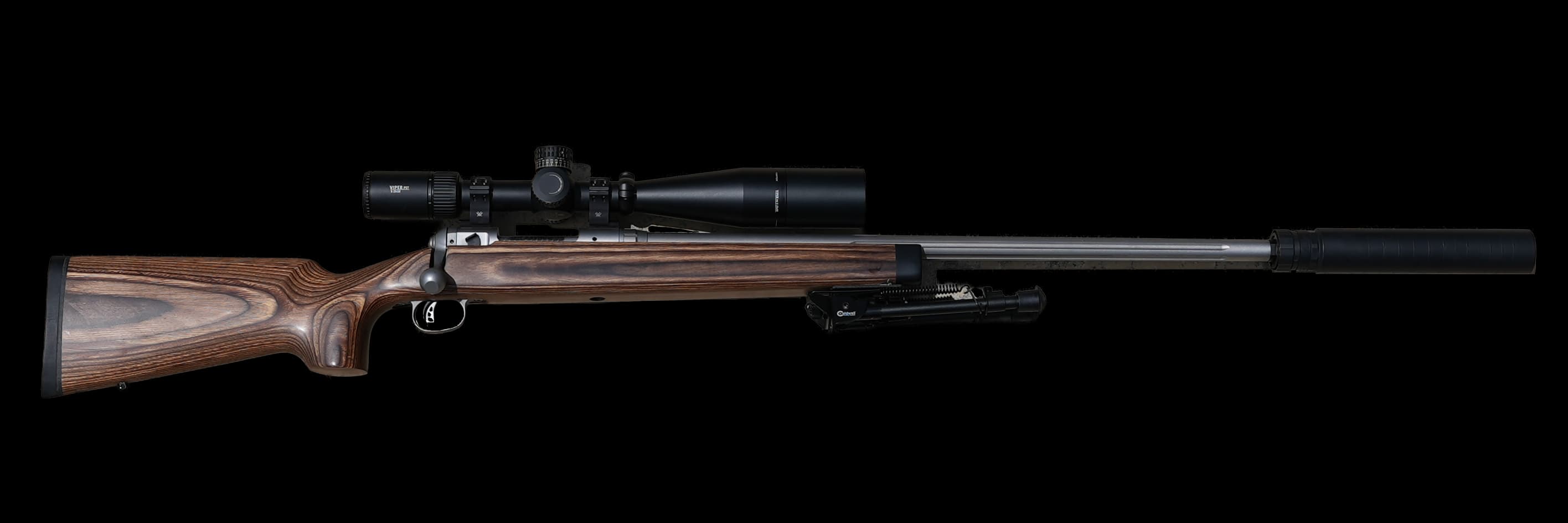
Threaded Barrel
Ensuring your bolt action rifle is ready to suppress is as easy as checking to ensure you have a threaded barrel. If you have threads and a proper shoulder to interface with, your bolt action will be good to go. Unsure if your rifle is threaded? A quick visual check can tell you pretty quickly if there are threads. Most threaded rifles will ship with a thread protector that might blend pretty seamlessly with the barrel, so be careful not to mistake this for an unthreaded barrel. Sometimes it can be tricky to see even if you know what to look for. No shame in checking with the manufacturer to see if your barrel is pre-threaded.
Once you have identified the threads, you will then need to check with the manufacturer to see what the thread pitch is. This pitch is not standardized and will vary between models of the same family. So don't assume that because your 7mm has 5/8x24" threads, the .223 in the same model will have this thread pitch too.
If you don't have threads, you are not doomed. You will just have to contact a gunsmith who does barrel threading. Most barrel profiles will have enough "meat" to be able to add threads and ensure there is enough surface area on the shoulder to recess against.
Common thread patterns:
1/2x28"
3/4x24"
11/16x24"
Suppressor
The bolt action rifle is simple to suppress, with far fewer moving parts and tuning variables than a semi auto host. We can get away with simpler, lighter, and cheaper options when picking a dedicated bolt action can.
Because we are mechanically restricted to low rates of fire, we can use lightweight materials like titanium and never have to consider if we are overheating our can. Materials like stainless steel and Inconel will be just fine on a bolt action and we may consider using them simply to save some cost or if we want to migrate the suppressor to a semi auto in the future. But the bolt action rifle is the perfect host to realize the value of a titanium can without having to be perturbed by the limitations of sparking and fire rate restrictions. Most hunters or recreational shooters will find the roughly +30% in weight savings to be well worth the cost.
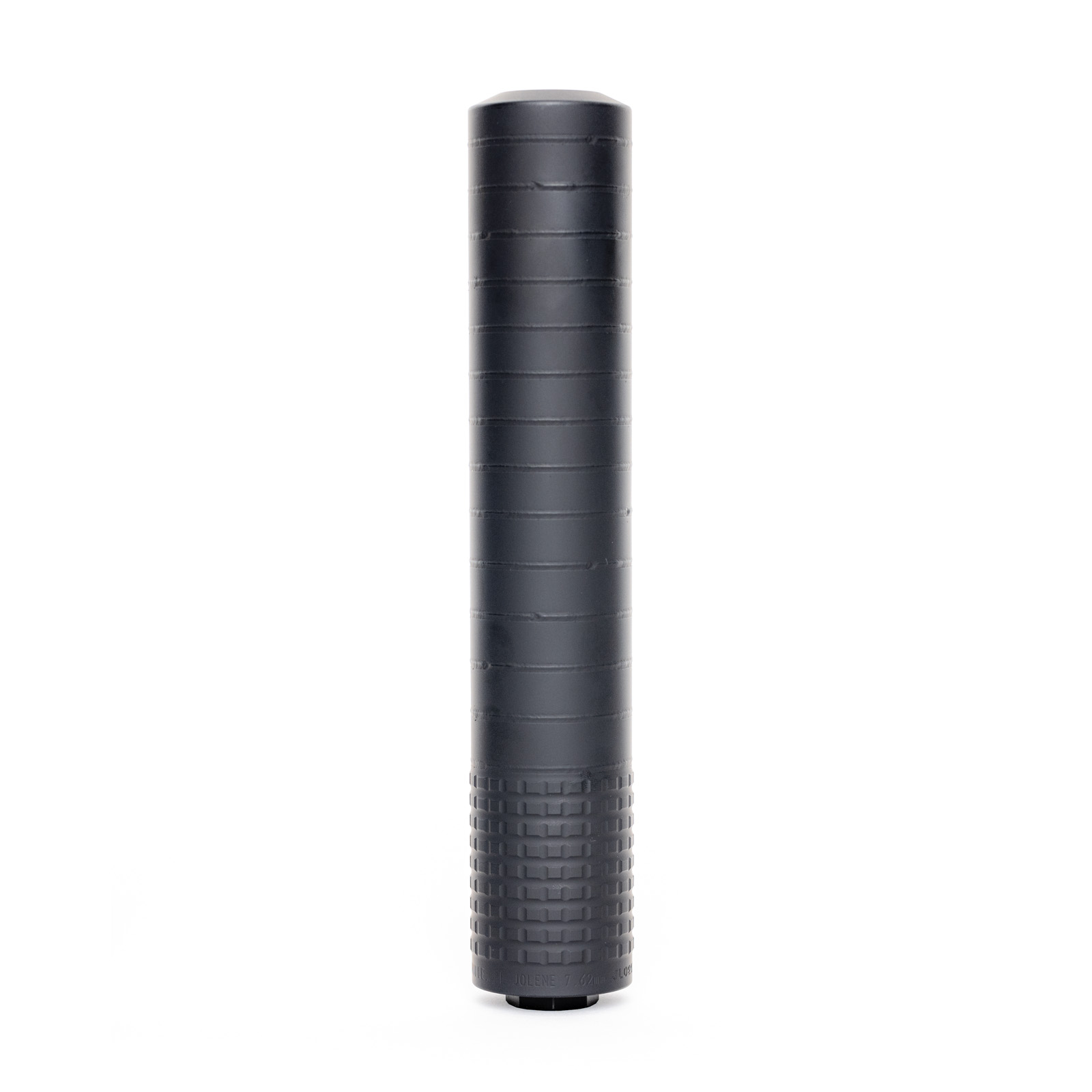
Because we don't need low backpressure, we can save some weight and cost by going with an old-fashioned welded baffle can. A low backpressure design will do no harm to us, but some of the lightest designs on the market will have simple baffle cones and none of the added material to build in high flow rate channels around them. These designs can often be lighter and easier to manufacture with a large internal volume to absorb the blast. Check out some of the featured picks for great, balanced, lightweight welded options.
Don't think you can't use a hybrid or low backpressure design. These will work just fine and many of the quietest cans of 2026 will have this tech. It could give you a greater multi-use can if you want something you can move over to a semi auto.
Related Products


Muzzle Device and Mount
Bolt actions made in this century, with a few exceptions, will all feature a simple threaded barrel. This makes adding a muzzle device simple and in line with all the conventional wisdom about mounts. If you want QD, select a QD of your choice. If you have a short barrel and want to protect your baffle, ensure you are using a muzzle brake to absorb the blast. If you have read through the muzzle device and mounting information on this site and know what you want, adding it to the bolt action should be straightforward. But I am going to add my two cents and advocate for the direct thread mounting option.
When I talk with people about suppressing a bolt action, most of them are wanting a suppressor for either hunting or precision shooting. For both of these applications the direct thread method affords us a few key advantages. One, it is the lightest method. For back country hunting this is an easy way to reclaim a few ounces where it counts. Two, it ensures you get a perfectly concentric bore, that is, your suppressor is perfectly in line with the end of the barrel. The benefits of avoiding eccentric alignment, beyond preventing baffle strikes, are a clean return to zero when remounting, preserved barrel harmonics, and better accuracy retention in long range shooting. A direct thread avoids disrupting these things by having a single point of contact between the suppressor and barrel, while avoiding the risks of tolerance stacking.