 SilencerScout
Key Info
- —
Use case drives material choice
- —
Titanium is our top recommendation for most use case with it's light weight.
- —
For MOST, Stainless, Inconel, and Haynes 282 can be used interchangeably sporting vary similar properties.
Common suppressor materials
Hopefully this puts you at ease when reading suppressor spec sheets. Manufacturers know that most people won't read the manual and will do very stupid things with their cans. Good manufacturers don't pick fragile materials, and they design suppressors to outlast the rigors owners will subject them to. Warranties on NFA items are expensive to honor, so reputable companies have every incentive to build cans that hold up. Buy from a reputable brand and don't worry too much.
Here's a simple tool to help you get familiar with common suppressor materials before you dig into the details in the chapters.
Material stat comparison
Pick a suppressor build material to load its spec card. Each bar is scaled against the field, so a fuller bar is better for suppressor duty. Faint ticks mark where the other materials land.
Haynes 282
Nickel superalloy with the highest sustained-fire ceiling in the field — built to take belt-fed and full-auto heat.
Titanium
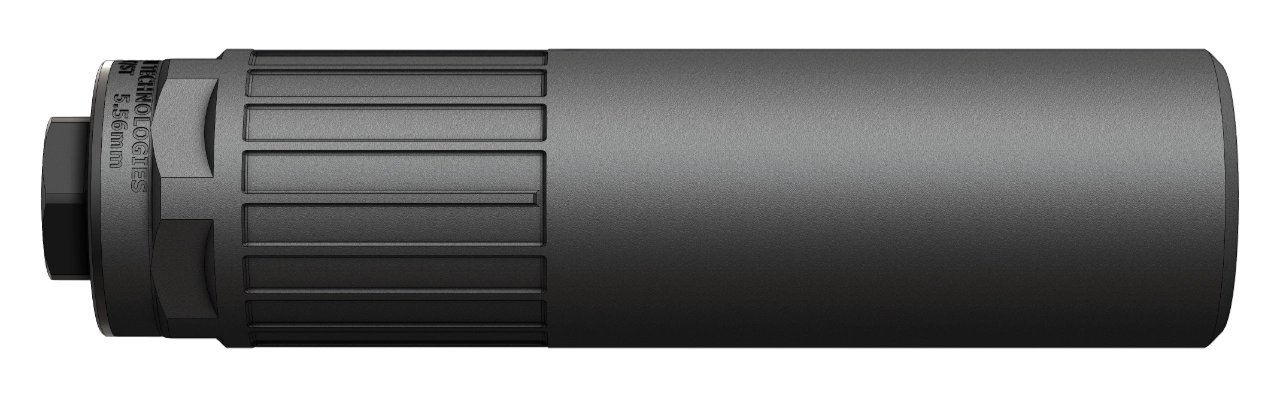
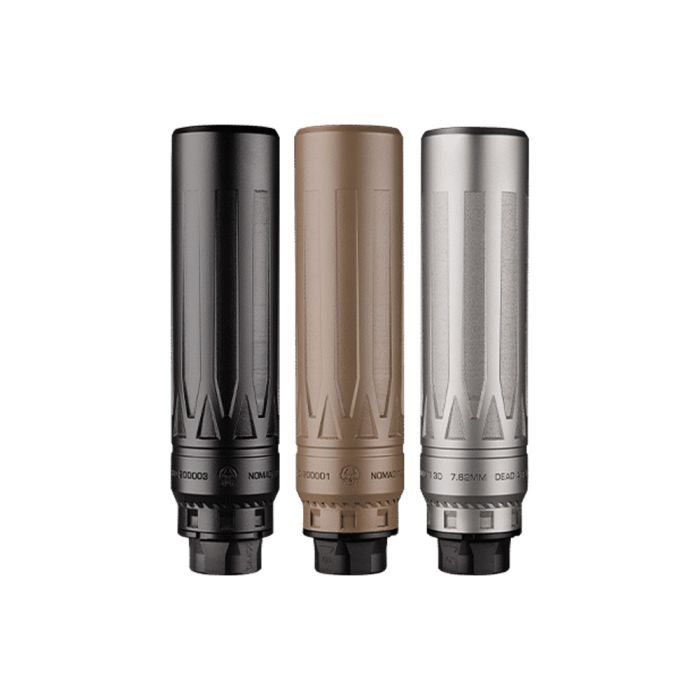
Titanium is our top choice for suppressors, and our most frequently recommended material for consumers. Emphasis on consumer. For a few specific reasons, titanium is not "combat worthy," but for shooters who understand those limitations, its low weight and corrosion resistance make it the best material on the market for nearly every civilian use case.
Start with the weight. A titanium suppressor runs roughly 2/3 the weight of a comparable stainless steel can, and those savings change how a rifle handles. There is a saying in hiking, "a pound on the foot is worth five in the bag," meaning heavy boots exhaust you more than equivalent weight you aren't lifting with every step. The firearms equivalent might be "an ounce on the muzzle is worth three on the stock." No matter how strong you are, a heavy muzzle reduces the time you can hold a rifle on target, and it punishes precision shooters who care about barrel harmonics, hunters carrying a rifle all day, and home defense setups that need to swing fast in tight quarters.
If titanium were perfect, it would be everywhere. And everywhere, it is not. Titanium struggles to survive sustained full-auto fire, with some designs failing under a full SOCOM 5.56 loadout. It is also prone to sparking. As many readers know, titanium is used in fireworks, and when small particulate exits a hot can, it produces a bright flashy streak. This is a non-issue for most shooters, but for the cross-section of users running night vision in low light or operating in combat zones where a muzzle spark would give away a position, titanium is the wrong choice.
Service life is the other common knock against titanium, which does wear faster than stainless, Inconel, or Haynes. In practice, most shooters would have to burn through many thousands of dollars in ammo before noticing any performance degradation, and the few who actually wear out a titanium can clearly have enough money in ammo that the cost of a replacement is a rounding error. Many manufacturers will even warranty that scenario, knowing few customers will ever get there.
For the overwhelming majority of buyers, none of titanium's weaknesses matter. Recreational shooters, hunters, home defenders, and precision shooters trying to preserve barrel harmonics are all better served by titanium than by any other material on the market. It is lighter, it handles better, and the wear ceiling sits well past where most people will ever shoot. If you are not running a belt-fed or kicking down doors for a living, titanium is the answer.
ConsiderWhat is your real fire rate?
ConsiderHow much time do you spend between mags?
ConsiderDo you use night vision or get shot at?
Pros
Lightweigth
Corrosion resistance
Cons
Fire rate limitations
Shorter life cycle
Sparking in low light
Cost
Related Products

Inconel
A suppressor's core job is to reduce sound signature and flash signature. Titanium fails at flash reduction, earning a solid F- as it's spits streaks of light out the front of your gun. For most recreational shooters and hunters, flash signature is a non-factor. The steel gongs at the range aren't going to shoot back, and wild game won't know what they're looking at. But for some shooters, flash signature is the difference between life and death in a firefight. Materials like Inconel, stainless steel, and Haynes 282 excel here, and they also support higher fire-rate ratings for sustained full-auto strings.
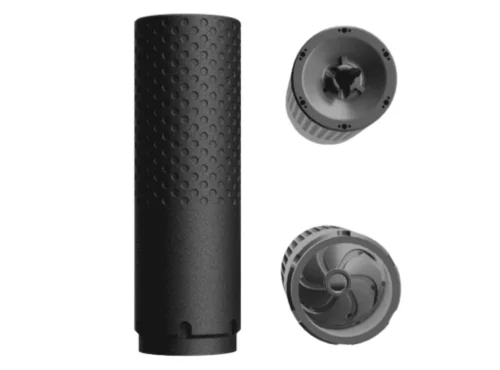
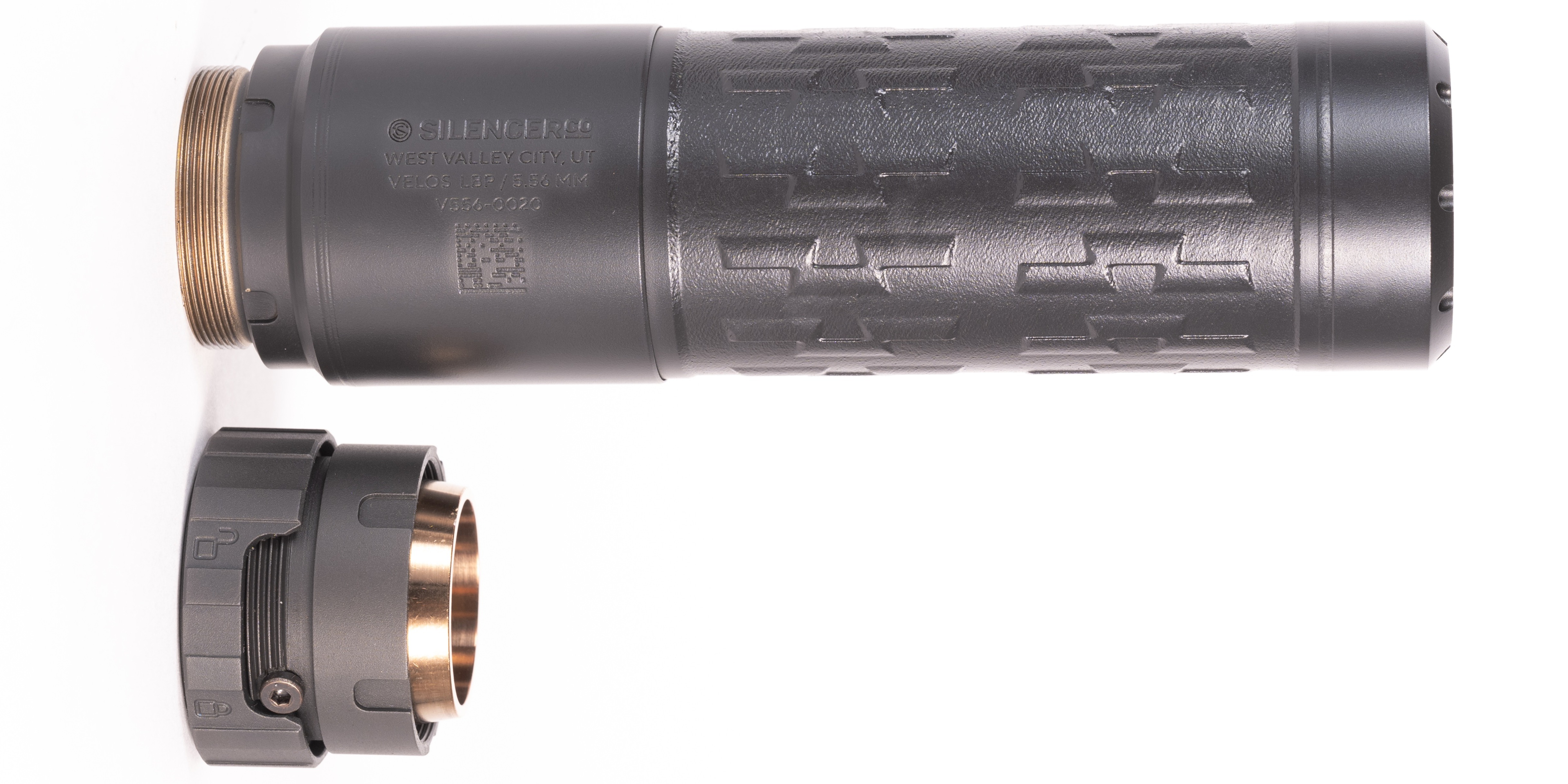
Inconel 718 is a very common suppressor material, sitting alongside titanium as a default in additive manufacturing. It's relatively cheap compared to Haynes 282 and titanium while delivering the characteristics you want in a high-temperature, high-use material. The only real downside is that it weighs significantly more than titanium.
That makes Inconel a great option for full-auto use, duty use, and night vision use, and it finds a natural home on semi-auto rifle hosts and SBRs.
Pros
Increased Durability
No Sparking
Cons
Heavy
Related Products
Stainless Steel
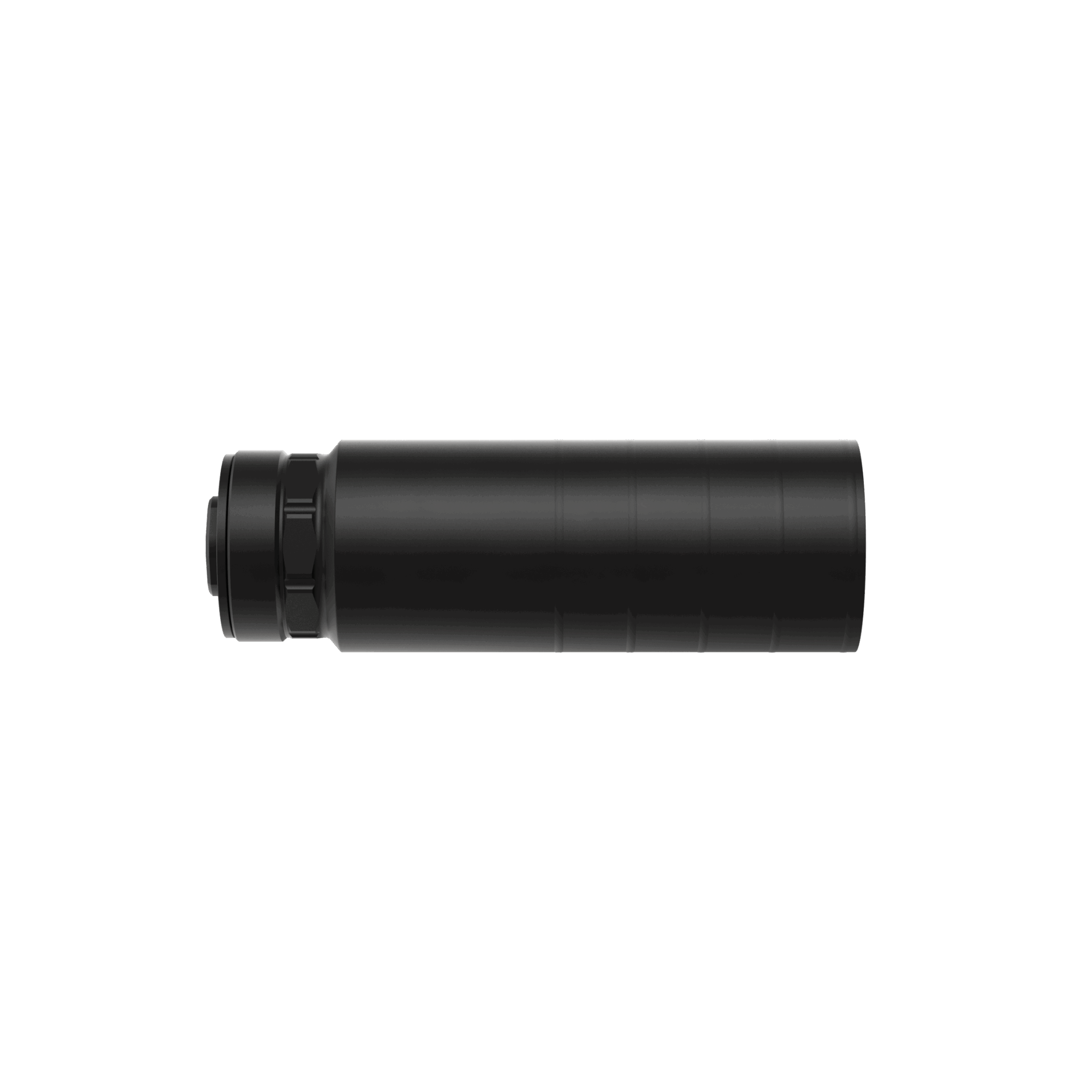
Stainless steel is a workhorse material, common in traditional welded suppressors and still widely used today. It handles most full-auto fire schedules without complaint, doesn't spark, and costs less than titanium or Inconel.
Compared to Inconel, stainless gives up some high-temperature strength and oxidation resistance, which matters if you're running extended strings of sustained automatic fire. For most shooters, that tradeoff is irrelevant. Stainless handles everything from casual range use to demanding duty schedules, and the price difference is real money.
If you want to avoid the fire rate caveats of titanium, don't need the extreme heat tolerance of Inconel/Haynes, and aren't chasing every possible ounce of weight savings, stainless steel is probably the right answer. It's unglamorous, but it works.
Related Products


Haynes 282
This material has one mission: soak up heat. Of all the materials on this list, Haynes 282 does it best, earning it the accolade of true belt-fed machine gun material. You have to be doing insane things to break a Haynes 282 can. Belt-fed M249? An 8" .308 barrel? How about a belt-fed 8" .308? This is a niche material for niche purposes.
Now that I'm done gassing it up, I'll let you in on a secret. Haynes 282 is not that different from Inconel. The fire rate limits are not that far apart, and both will outlast anyone who doesn't have their ammo paid for by Uncle Sam.
In truth, if you can own and use machine guns, you already know about Haynes 282 and have a good sense of why you do or don't need it. For the rest of us, Haynes is just a slightly niche and very cool material we get to buy simply because it's cool. I wouldn't go out of your way to seek this out over the common Inconel variants on the market.
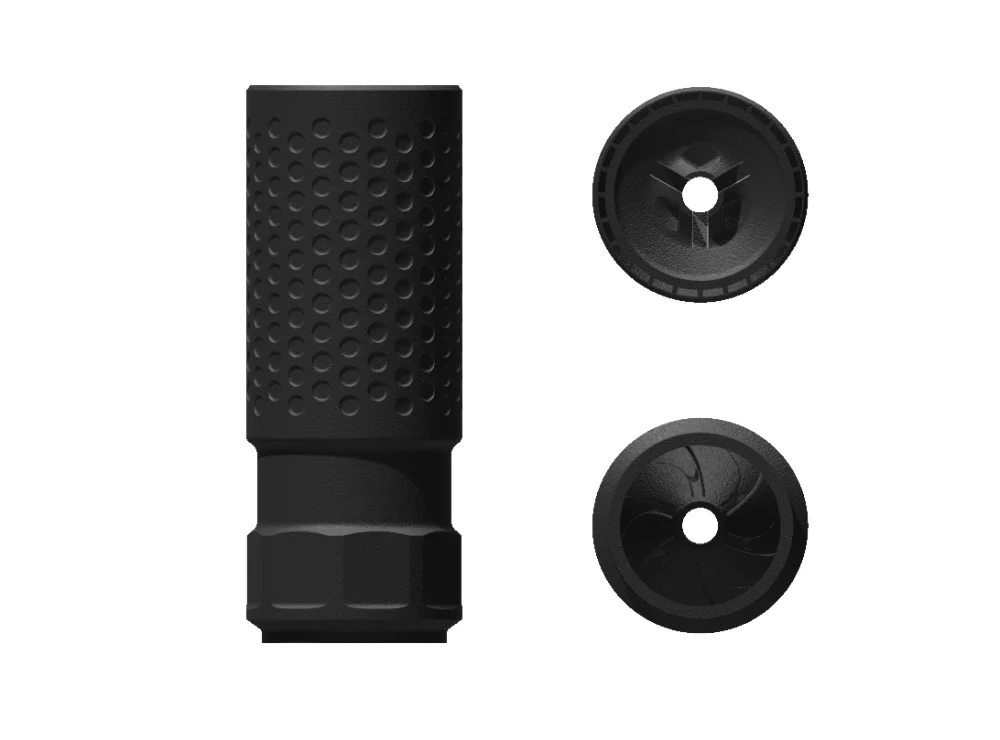
Aluminum
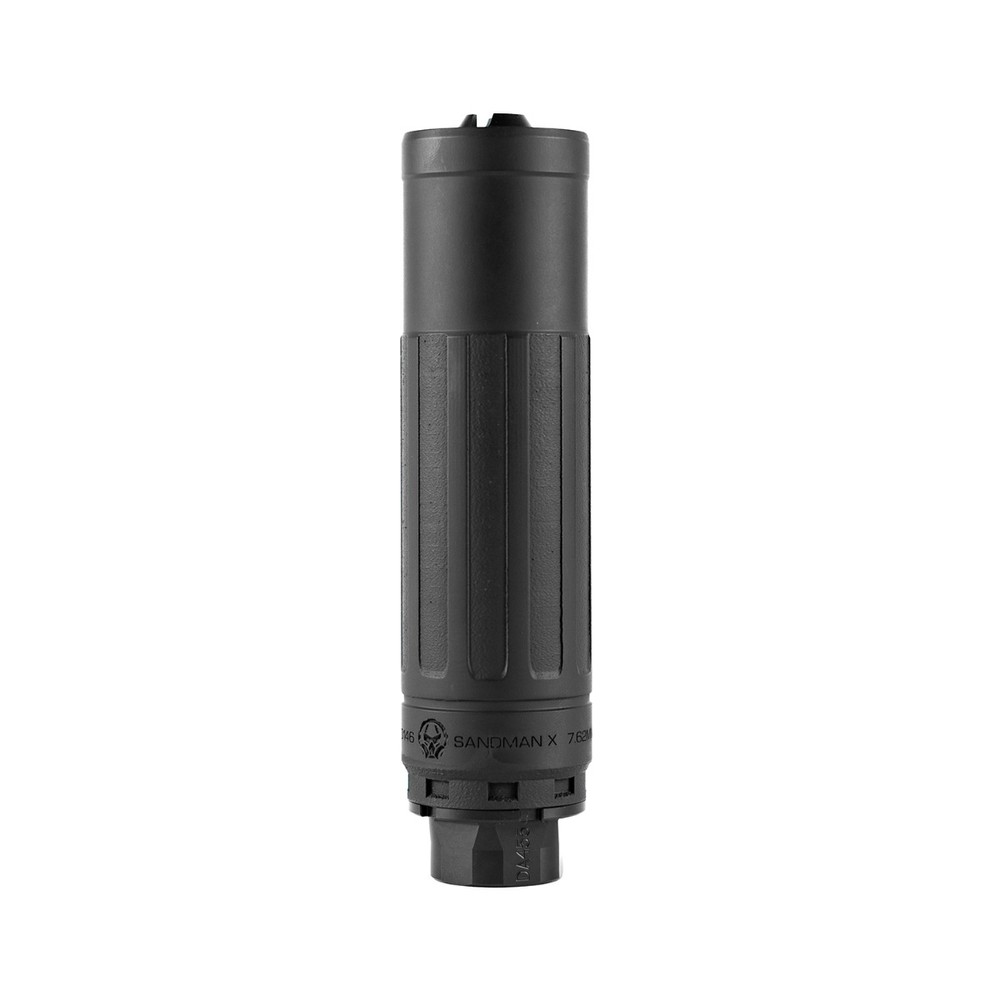
Of all the suppressor materials on this list, aluminum runs the coldest in price and the hottest in weight savings, making it the a good option for rimfire cans or light use pistol cans where pressure and temperature can facilitate.
Aluminum is not excellent with heat. Run enough .22 LR through it fast enough and you will find its limits, though to be fair, "fast enough" on a rimfire is a pretty generous threshold. Sustained mag dumps will shorten its life, but if they are so affordable you might not care.
The sweet spot for aluminum is exactly what it sounds like: rimfire. Subsonic .22 LR, .22 WMR, the occasional .17 HMR or 9mm if the manufacturer blesses it. Try to push it past that envelope and you're no longer using a rimfire suppressor, you're conducting an experiment in material failure.
For most people buying a rimfire can, aluminum is the obvious call. It's affordable, light, and perfectly matched to the job. The limitations are real but irrelevant if you're shooting what you should be shooting through it. Titanium might be the better rimfire choice, but if you are doing some casual plinking, don't overthink this one and save yourself some money.
More from Basics
- Understanding Sound and SuppressionWe will cover sound as it is perceived by the human ear, how this can be deceptive when considering hearing damage, and what do people mean when they talk about "tone".
- What size suppressor do I want?This article covers the how size changes suppressor characteristics, some of the popular use cases for small and large cans, as well as a cost benefit analysis of every ounce added.
- Barrel Length Restrictions for SuppressorsEvery can has its limit. Run it too fast, too hot, to high a pressure and it will break. In this article, we will cover the complexities of the 'too high a pressure' scenario and explain how the title "no barrel length restrictions" might be a tad misleading.