 SilencerScout
Key Info
- —
Backpressure is gasses that would have gone out the barrel, instead coming back into the firearm as a result of suppression.
- —
Some firearms, like bolt actions, are backpressure agnostic, meaning high backpressure cans don't affect the shooting experience.
- —
Semi-Auto firearms always benefit from low backpressure, but the degree to which varies by host.
- —
Modern low backpressure designs are often quieter than many high backpressure cans of a few years ago.
What is backpressure?
When a bullet leaves the crown of a barrel, it is followed by a barrage of hot, high pressure gas that are being quickly dumped into the atmosphere that we the end user experience a noise and concussion. This event will be called pressure at the muzzle. When we attach a suppressor to the end of our firearm, we are doing one of two things with that pressure wave. One, we are trying to make that pressure wave travel a longer path before leaving the front of our firearm to give it time and space to dissipate. Two, we are trying to trap it and hold it in a contained space, letting it slowly leave the front of the gun resulting in a more diffused lower amplitude pressure wave. Or in plain English, we are flattening out that blast wave. This is all good stuff, however the issue arises, when you you diffuse the hot gasses out over time, we can have a scenario where the firearm's action opens up and gives the hot gas a path to escape that wasn't there before. These paths could be the breach of the firearm very close to your face, or these could be the contact points where a semi automatic firearm recycles gas to operate the system. Either way, the end result is more gas coming back at the user, and more gas, force, and wear being imparted on your firearms.
ConsiderBackpressure is the main reason a suppressed semi-auto can blow extra gas back toward your face. It describes how much gas the can forces back through the action, not how loud the shot is.
ConsiderDo not confuse suppressor backpressure with recoil or sound. A high backpressure can be very quiet; the trapped gas still has to go somewhere, and on a gas-operated host that often shows up as port pop and blowback at the shooter.
Is this always bad? No
Remember that a suppressor is spreading the pressure out over time. Now understand that the unsurprised time horizon was one tiny fraction of a second. A suppressed firearm took that tiny fraction of a second and made it a slightly larger but still tiny fraction of a second. So If we have a manually operated firearm, such as a bolt action hunting rifle, where the chamber never opens, a high backpressure suppressor is good! It means we are using the ability to trap gas to it's fullest. Hosts that are backpressure agnostic are bolt actions, lever actions, single shots and any other firearm that has a breach that stays closed until the shooter cycles it manually.
ConsiderThis does not mean that recoil impulse does not change. Nor are we implying that recoil will be worse, this will vary from platform to platform.
ConsiderConsider that "smoke" that normally rises from the chamber after cycling a manually firearm will still be there and could be amplified by a suppressor.
ConsiderA bolt action rifle is the ideal suppressor host precisely because it is backpressure agnostic. The breach stays closed, so you can chase maximum sound suppression with a high backpressure can and never pay a gas penalty.
Pros
Traps maximum gas for top-tier sound suppression
No semi-auto action to over-gas
Zero gas blowback to the face
Simpler, often lighter welded designs
Cons
Chamber smoke can still pool and rise on cycling
Recoil impulse can shift on some platforms
Wrong tool for a gas-operated semi-auto host
Related Products

Does my semi-auto need a low backpressure can?
Our answer to this will be driven more by an understanding of your host firearm that you will be using the suppressor on, as every semi-auto handles gas differently. Firearms with adjustable gas blocks and/or delayed opening mechanisms tend to respond to backpressure better than a direct blowback or a fixed gas setting host. For firearm-specific recommendations, see our Firearm Host articles.
More often than not, you don't NEED a low backpressure suppressor, and people have been making high backpressure cans work for decades now. However, in every scenario, you will be able to realize benefits from a low backpressure design, even on easily tunable hosts with an adjustable gas block. A perfectly tuned firearm with a high backpressure suppressor will still stack gasses in the system, and over strings of fire will end up with more gasses oozing out the back end near your face. It can be very tolerable, but it is still something we want to avoid. This same highly tuned firearm, when the suppressor is removed, needs to be retuned for unsuppressed shooting, where a reduced backpressure design might be able to bridge the two. We are phasing out high backpressure welded cans in favor of low backpressure cans on all of our semi-autos going forward.
ConsiderYour host matters more than the can. An adjustable gas block or a delayed blowback action tolerates a high backpressure suppressor far better than a fixed-gas AR-15 or a direct blowback pistol-caliber carbine.
ConsiderA low backpressure suppressor lets one can move between a tuned and an untuned host without re-tuning the gas system every time you take the suppressor off.
Pros
Less gas blowback to the face and eyes
Reduces over-gassing and bolt speed
Often no adjustable gas block needed
Cons
Premium price over a basic welded can
Not strictly required on a tunable host
Hybrid internals can add weight and cleaning requirements
What designs are lower backpressure?
If your host is semi-auto and is struggling with a high backpressure suppressor, start looking into low backpressure solutions. Some designs do a great job making the gas travel through long pathways without getting trapped in high pressure pockets that would impart backpressure. These designs can have almost zero perceivable difference on the user and host firearm and can be a great choice for those who want suppression without the risk of needing to tune the host firearm. Low backpressure doesn't mean compromise. Most of the top performing suppressors use a hybrid design that both traps gas in high backpressure chambers and has low backpressure venting systems to keep gas traveling forward. You can have your lunch and eat it too with modern suppressor design, as many of these hybrid designs are leading the charts in suppression. The only consideration we would put in front of you: these modern hybrid designs sometimes have added internal complexity that can increase weight and have different wear patterns or more intense cleaning schedules. For this reason, if you know you are using a manual firearm and are weight conscious, the perfect suppressor will likely be a traditional high backpressure can. Check out our suppressor-specific reviews to understand how each can stack up in their sound-to-weight-to-backpressure ratios.
ConsiderSuppressor design that trend towards having no perceivable effect on host firearms will be labeled "Low Backpressure" on our site. Those who try to balance low backpressure and sound suppression will be labeled "Hybrid".
ConsiderFlow-through and flow-forward designs are the classic low backpressure pattern. Modern 3D printed hybrid cans take it further, blending high-resistance baffles with high-flow channels to keep gas moving forward and away from the action.
Related Products
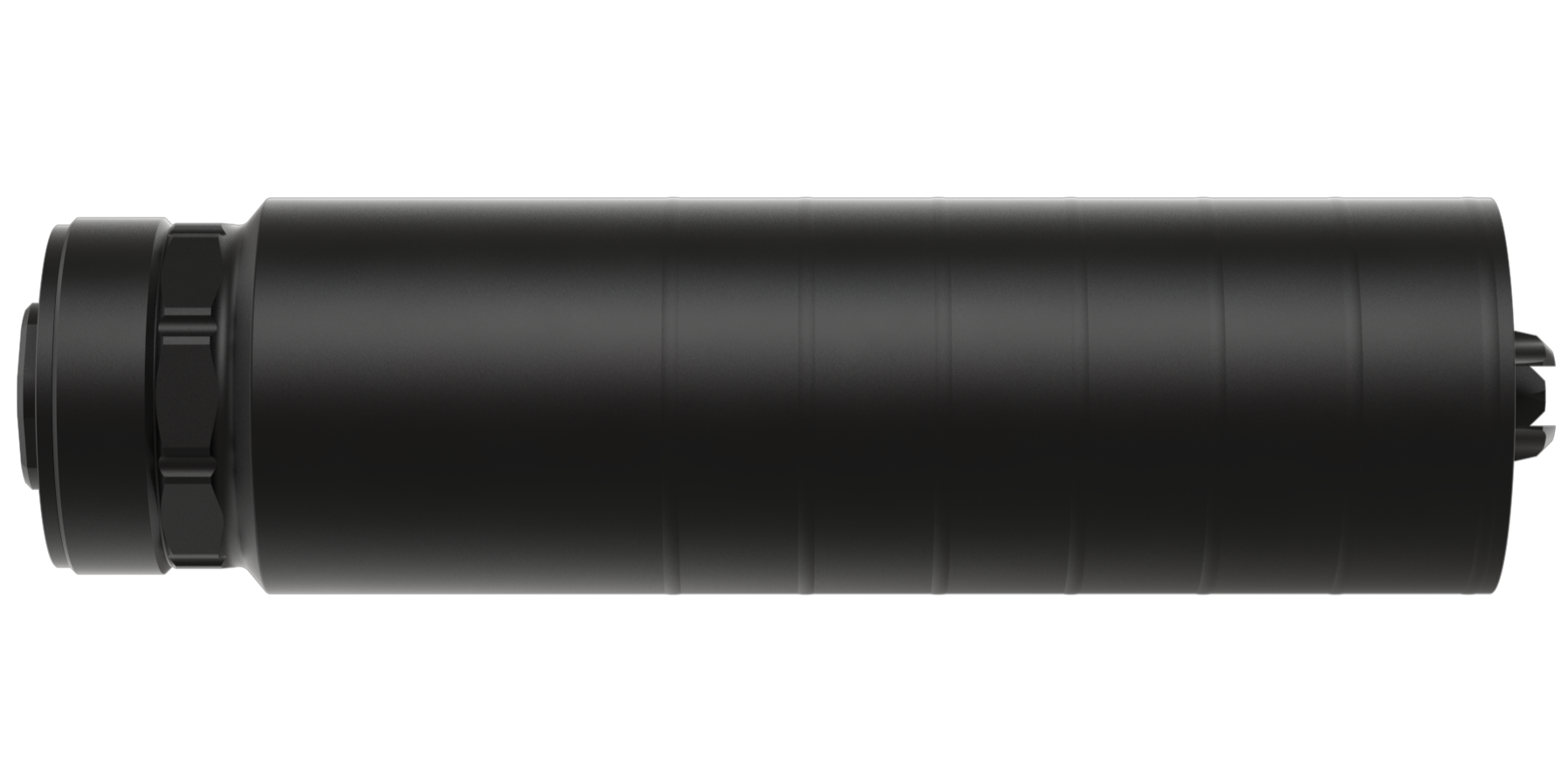
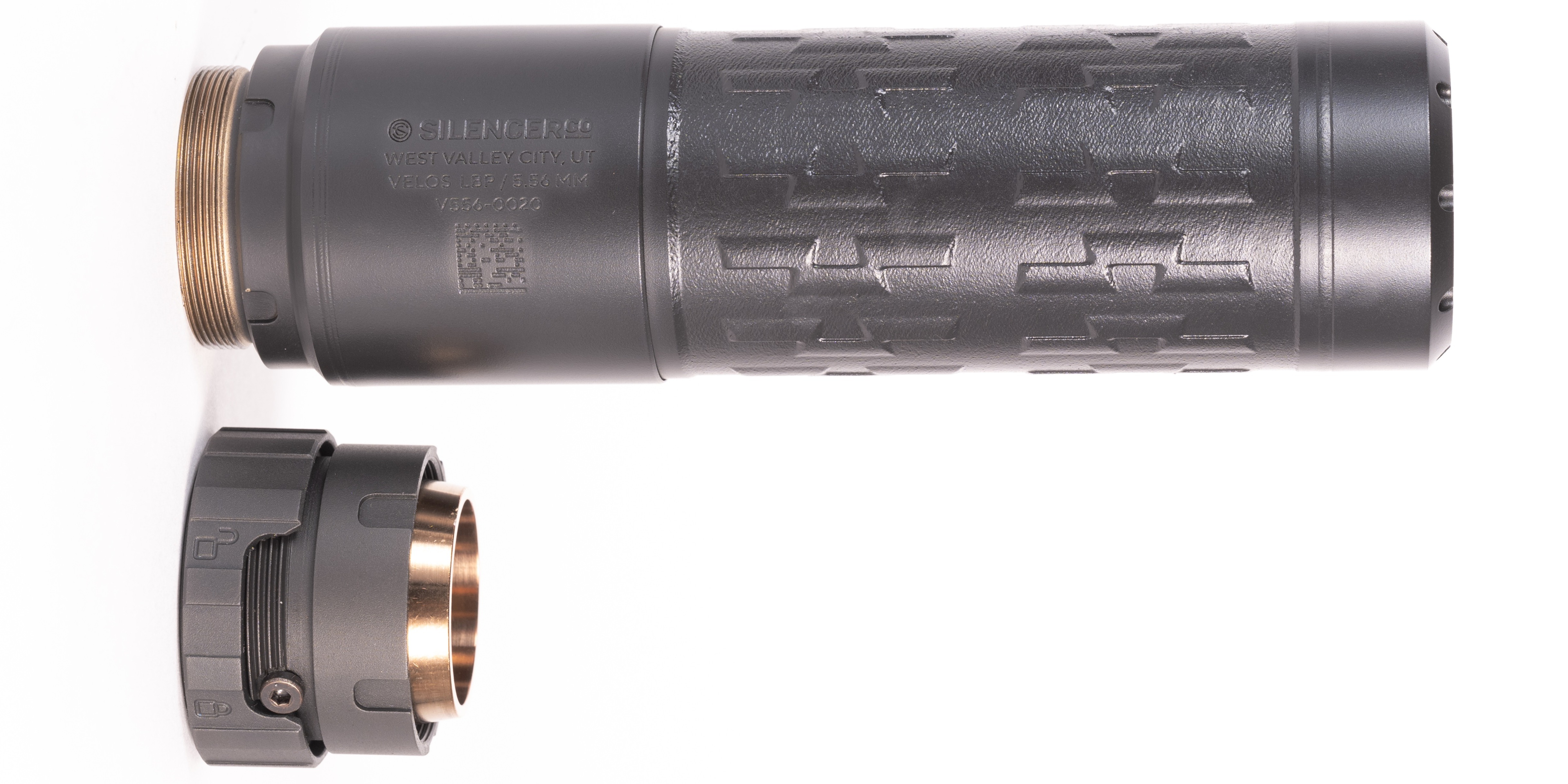

Is low backpressure always louder?
A few years ago, we could confidently say that low backpressure designs, in most scenarios and on most platforms, would be louder than their high backpressure peers. If you wanted the best sound and flash performance, you had no choice but to run a high backpressure can and tune your host firearm accordingly.
In 2026, that dynamic has grown murkier and, as of late, seems to have inverted entirely. If you want the quietest suppressor today, you are more likely than not looking at a design that, in some way, features geometry that keeps gases moving forward and away from the host firearm. The degree varies, and the quietest overall system will still involve some backpressure and some tuning. The era of 9-inch welded cans at the top of the sound charts is over. Mid-sized, balanced printed cans with hybrid designs featuring high-resistance baffles and high-flow-rate channels are dominating the market. 3D printed cans have made for a "rising tides lift all boats" dynamic in the suppressor market.
ConsiderThe old rule that the quietest can is always a long welded baffle stack no longer holds. As of 2026, the quietest suppressors usually use forward-venting hybrid geometry.
ConsiderIf sound is your only priority, do not rule out a low backpressure or hybrid can on reputation alone. 3D printing has lifted the whole market; check suppressor reviews and sound data before assuming a welded design wins.
More from Basics
- Understanding Sound and SuppressionWe will cover sound as it is perceived by the human ear, how this can be deceptive when considering hearing damage, and what do people mean when they talk about "tone".
- What size suppressor do I want?This article covers the how size changes suppressor characteristics, some of the popular use cases for small and large cans, as well as a cost benefit analysis of every ounce added.
- Suppressor MaterialsExploring the nuanced topic of suppressor materials.